
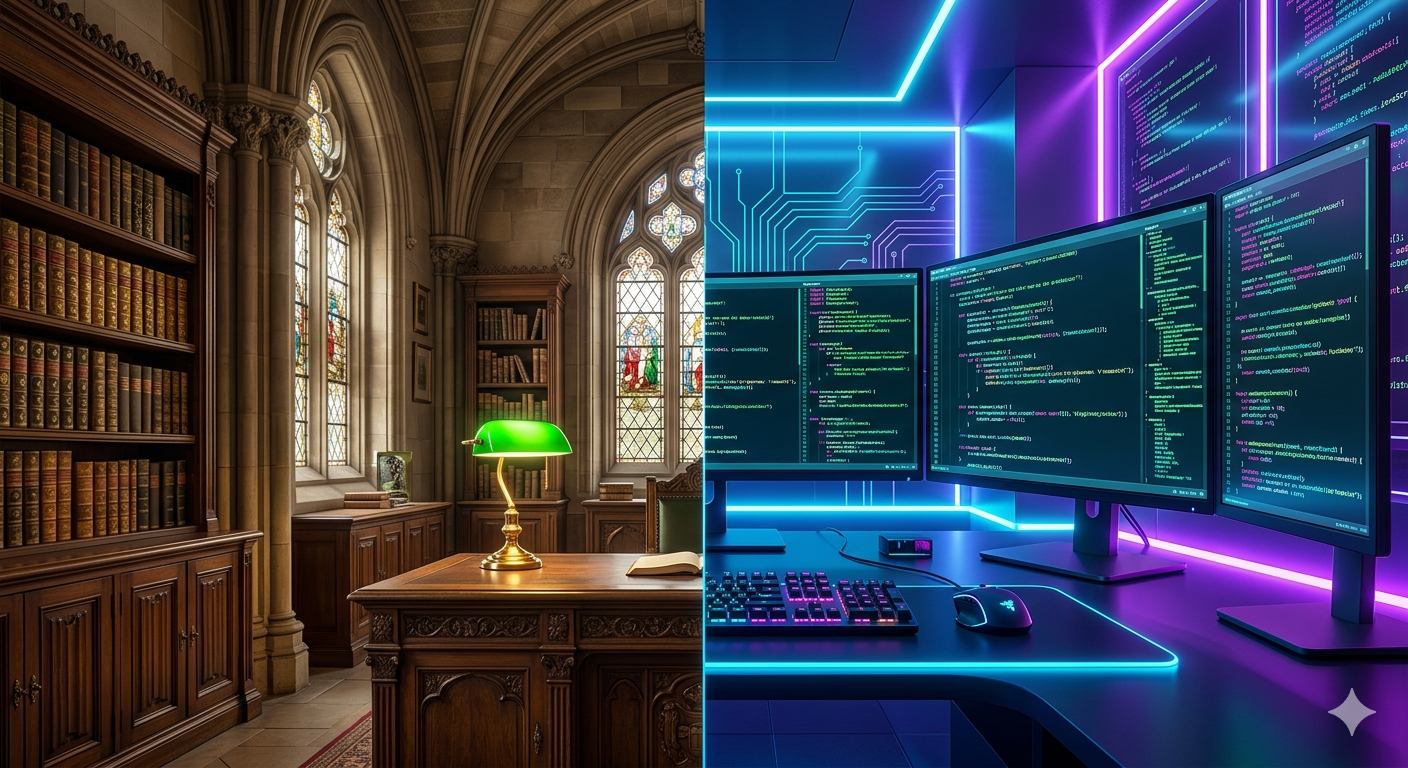
Traditional Degree vs. Coding Bootcamps:
Which Path is Right for You?
The tech sector is currently locked in a massive ideological debate regarding professional credentials. Ten years ago, if you wanted to work as a software engineer at a premium tech hub, you essentially needed a four-year Bachelor of Science in Computer Science. Today, short-term, high-intensity coding bootcamps promise to take absolute beginners and turn them into hireable developers in twelve weeks.
This rapid shift creates significant confusion for aspiring developers. Is a formal university degree a massive waste of financial capital and time? Or do coding bootcamps provide a surface-level education that crumbles when faced with rigorous software architecture challenges?
The truth is that neither path is globally superior. They are tailored to entirely different personality profiles, career trajectories, and learning style preferences. Let’s look at how they compare across critical metrics.
Head-to-Head Comparison Framework
| Metric | Traditional BSCS Degree | Coding Bootcamp |
|---|---|---|
| Duration | 4 Years (Full-Time) | 12 to 24 Weeks |
| Core Focus | Theoretical algorithms, math foundations, computer architecture, systems ethics. | Practical framework development, building web interfaces, deployment pipelines. |
| Long-Term Value | Deep analytical adaptability. Prepares you for complex engineering problems. | Immediate employment readiness for entry-level front-end or full-stack web roles. |
When to Choose a Traditional University Degree
If you want to build a deep, foundational career designing new machine learning architectures, managing large hardware infrastructure systems, or working in advanced cryptography, a formal university computer science curriculum is invaluable. It provides a deep understanding of algorithm complexity, memory management, and professional engineering ethics that temporary bootcamps simply do not have the time to cover.
When to Choose a Coding Bootcamp
If you already possess an adjacent non-technical degree, need to pivot careers rapidly, or want to specialize exclusively in building modern web applications, digital publishing assets, or corporate database portals, a bootcamp can be highly efficient. They cut out general education requirements and focus entirely on the exact developer tools you will use during a typical daily office shift.
Final Thoughts: The Portfolio is the Ultimate Decider
At the end of the day, tech recruitment is highly meritocratic. Whether you graduated from an elite university or self-studied in a bootcamp, you will face an automated live technical coding interview. Your code either compiles and scales, or it doesn’t. Focus heavily on building a robust personal portfolio of functional digital projects.